


Laser Hair Removal Krakow

Laser hair removal Primelase Excellence and Soprano Titanium
Laser hair removal is a modern method of long-term unwanted hair reduction. It uses laser light energy to selectively target melanin in the hair follicles. With appropriately selected treatment parameters, it is possible to gradually reduce hair growth across various areas of the body.
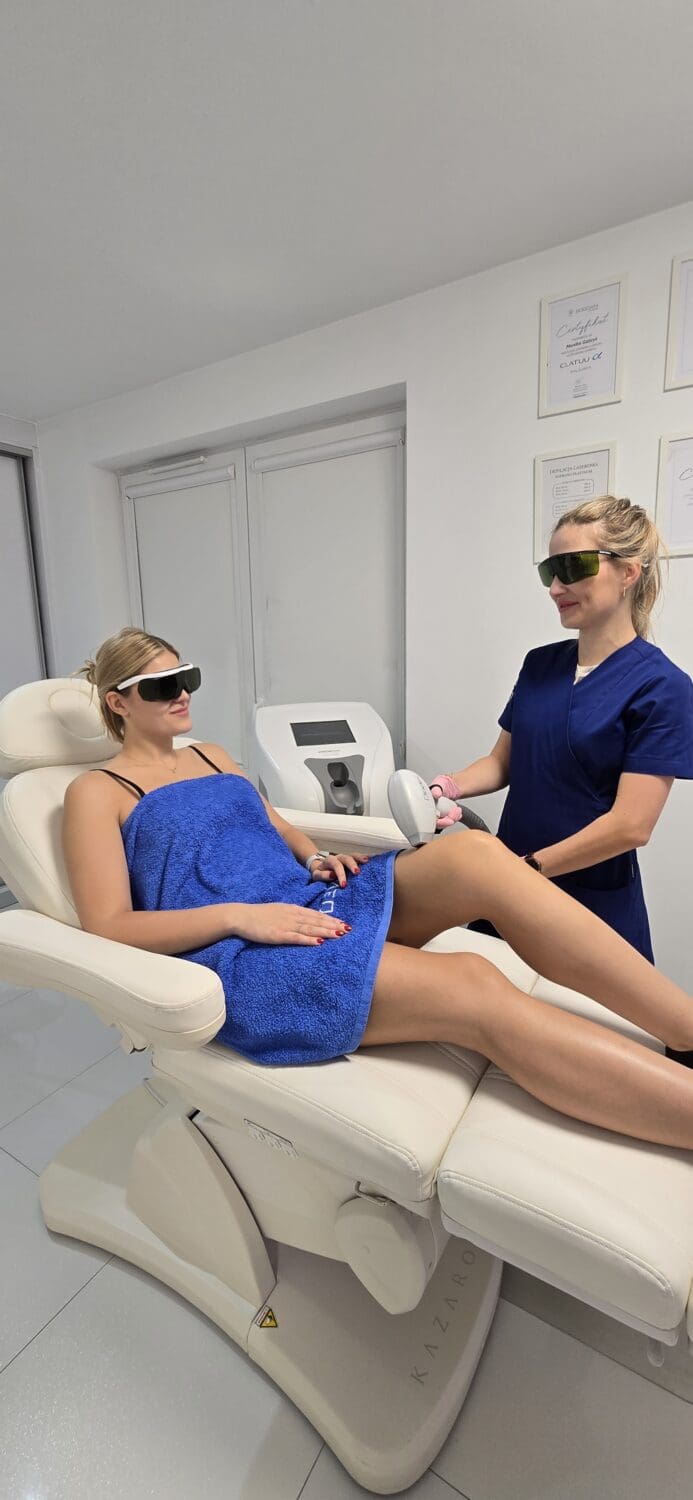
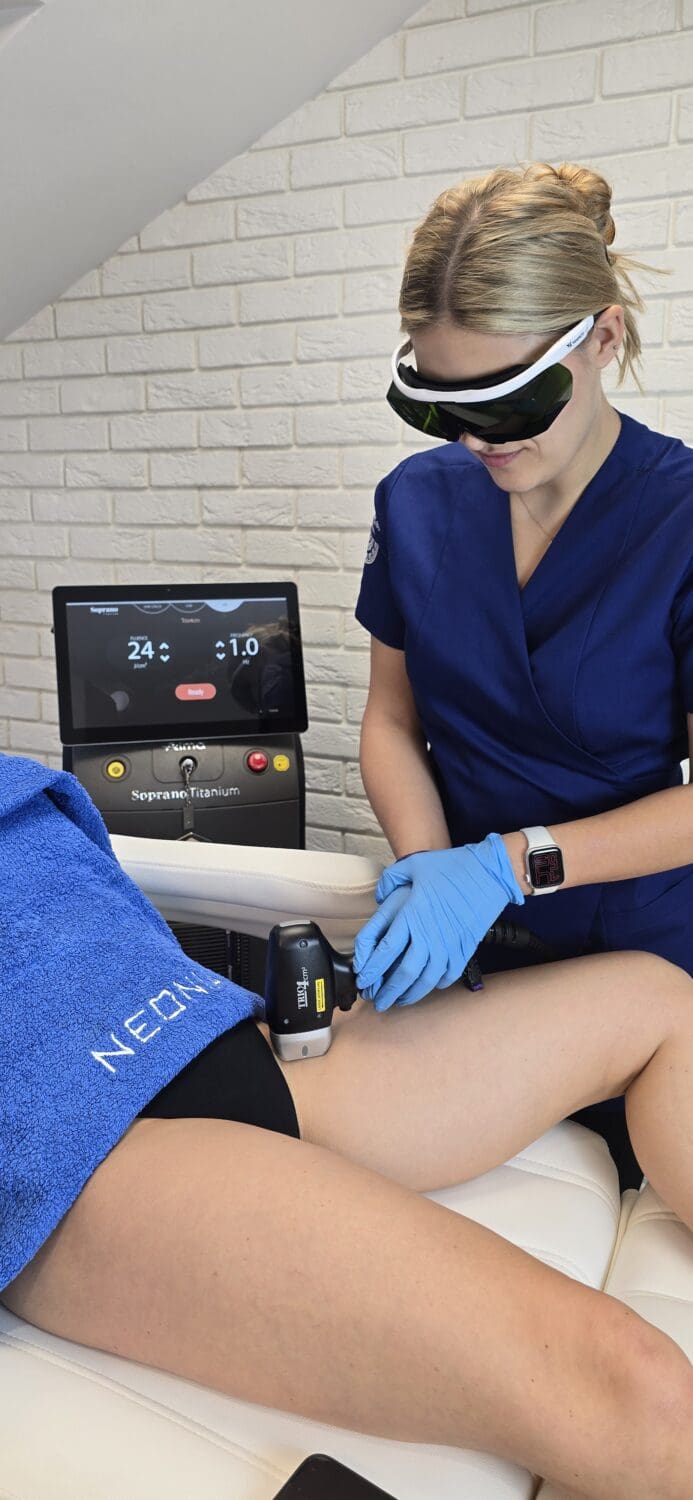
At Neonia Clinic in Kraków, we perform laser hair removal using two advanced devices: Primelase Excellence and Soprano Titanium. The former is a conventional diode laser with a wavelength of 810 nm, equipped with a 30 × 9 mm treatment handpiece and the Crystal Freeze cooling system. Soprano Titanium, on the other hand, uses three wavelengths – 755, 810 and 1064 nm – combined with SHR technology.
By offering two different technologies, we can individually select the device and treatment parameters to suit the patient’s skin phototype, hair colour and thickness, as well as the area being treated.
Our goal is to provide effective, safe and as comfortable as possible laser hair removal, preceded by an appropriate consultation and an assessment of the patient’s suitability for the procedure.
What makes both of these technologies stand out?
At Neonia Clinic, we use two state-of-the-art laser hair removal systems: Primelase Excellence and Soprano Titanium. Each uses a different technology, allowing us to tailor every treatment to the individual needs and characteristics of our patients.
Primelase Excellence – 810 nm diode laser
- High peak power of up to 4,800 W;
- USP (Ultra Short Pulse) technology, which delivers ultra-short laser pulses;
- 30 × 9 mm treatment handpiece, providing a treatment area of 2.7 cm²;
- Crystal Freeze contact cooling system, designed to maximise patient comfort during treatment;
- Two operating modes: static and dynamic;
- Fully adjustable pulse and energy settings to suit individual skin and hair characteristics.
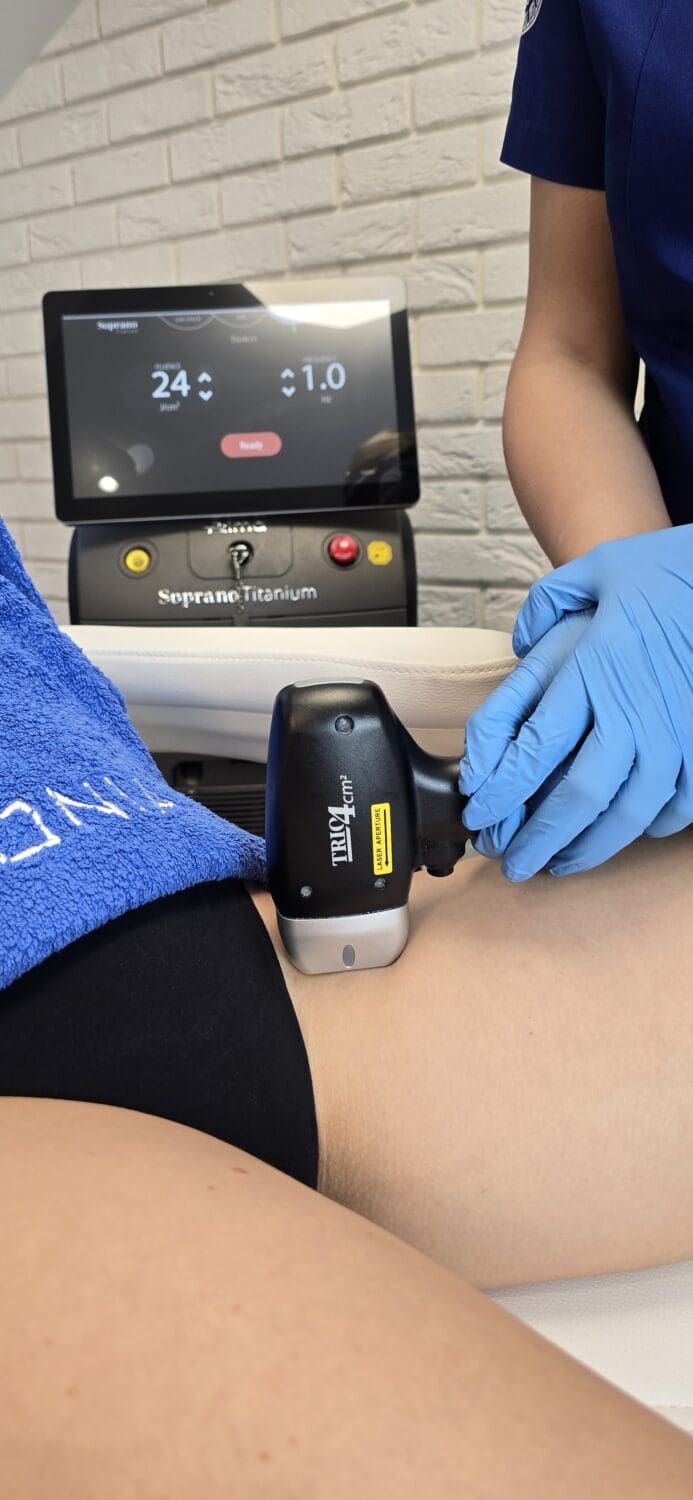
Soprano Titanium – triple-wavelength technology
- Combines three laser wavelengths: 755 nm, 810 nm and 1064 nm;
- SHR (Super Hair Removal) technology, which delivers energy gradually as the handpiece glides over the skin;
- ICE Plus contact cooling system;
- TRIO applicator with a 4 cm² treatment area;
- Adjustable treatment settings to accommodate different skin phototypes and hair types.
Why does having two different laser technologies matter?
Every skin and hair type responds differently to laser energy. That’s why we don’t rely on a one-size-fits-all approach. During your consultation, we carefully assess your skin and hair characteristics before selecting the most suitable laser system and adjusting the treatment settings to your individual needs.
By combining Primelase Excellence and Soprano Titanium, we can offer patients in Kraków two advanced approaches to professional laser hair removal, with treatments tailored to their individual needs.
What is the best laser for hair removal?
There is no single laser that is the best choice for everyone. The effectiveness of laser hair removal depends on several factors, including hair colour and thickness, skin phototype, the technology used and the correct selection of treatment settings.
At our clinic in Kraków, we offer laser hair removal using two advanced devices: Primelase Excellence and Soprano Titanium. Both systems are designed to reduce unwanted hair, but each uses a different technology.
The choice of laser should take into account the individual characteristics of the patient’s skin and hair. Hair colour is particularly important, as laser hair removal generally works best on hair containing sufficient melanin. Very light, grey and white hair may not respond well to laser treatment.
That is why a consultation before starting a course of treatments is so important. It allows us to assess the condition of your skin, identify your hair type and select the most suitable treatment approach.
The best laser for hair removal is not necessarily the one with the highest power or the most advanced features. It is the one whose technology and settings can be best adapted to the individual needs of each patient.
Laser Hair Removal in Kraków – Understanding the Different Types of Lasers
Alexandrite, Diode and Nd Lasers – What Are the Differences?
Several types of lasers are used for laser hair removal, each emitting light at a different wavelength. This affects how strongly the energy is absorbed by melanin – the pigment found in hair and skin – as well as how deeply the light penetrates the tissue. The most commonly used technologies include alexandrite, diode and neodymium-doped yttrium aluminium garnet (Nd) lasers.
- Alexandrite laser (755 nm) – characterised by high melanin absorption. It is commonly used for people with fair, untanned skin and lighter hair. However, because melanin in the epidermis also absorbs a significant amount of energy, particular care is needed when treating darker skin phototypes.
- Diode laser (approximately 800–810 nm) – offers a balance between melanin absorption and tissue penetration. It is widely used for laser hair removal, and appropriately selected treatment settings allow it to be used on different skin phototypes and hair types. Primelase Excellence, which we use at our clinic, belongs to this category.
- Nd laser (1064 nm) – uses the longest wavelength of the three. Its energy is less readily absorbed by melanin in the epidermis, allowing the light to penetrate deeper into the tissue. This makes it particularly useful for treating people with darker skin phototypes. However, its effectiveness in reducing unwanted hair also depends on hair colour and thickness.
Choosing the right technology should involve more than simply comparing wavelengths. Skin phototype, hair colour and thickness, the treatment area and the device’s technical parameters all play an important role. Each type of laser has its own applications and limitations, which is why no single technology is ideal for everyone.
The laser hair removal market in Poland has grown significantly in recent years. More and more clinics now offer hair removal treatments, but not every device marketed as a laser hair removal system has the same specifications, intended use, technical documentation or servicing support.
It is worth remembering that an attractive product name, a high advertised power output or a manufacturer’s marketing claims are not sufficient proof of a device’s quality. Before choosing a clinic, it is worth finding out exactly which equipment is used, who manufactures it, what it is designed for and whether it has the documentation required under applicable regulations.
What should you look for when choosing a laser hair removal clinic?
- Manufacturer and device origin – check whether the manufacturer, device model and the entity responsible for placing it on the market can be clearly identified.
- Documentation and intended use – professional equipment should have documentation appropriate to its category and intended purpose. It is worth asking about the EU Declaration of Conformity and documents confirming the device’s regulatory status and intended use.
- Technical specifications – important factors include the type of light source, wavelength, treatment spot size, energy delivery method and cooling system.
- Servicing and technical support – professional equipment requires appropriate maintenance, regular inspections and access to technical support.
- Practitioner’s experience – even the best equipment requires a thorough understanding of how it works, proper patient assessment and careful selection of treatment parameters.
Which laser hair removal systems do we use at Neonia in Kraków?
At Neonia, we focus on professional laser hair removal systems from reputable manufacturers. We currently use two devices: Primelase Excellence and Soprano Titanium.
Primelase Excellence is an 810 nm diode laser equipped with a 30 × 9 mm treatment handpiece and the Crystal Freeze contact cooling system.
Soprano Titanium is a system that combines three wavelengths: 755 nm, 810 nm and 1064 nm. It operates using SHR and In-Motion technologies and features the ICE Plus cooling system.
How Do We Choose Our Laser Hair Removal Equipment?
At Neonia, selecting laser hair removal equipment involves carefully evaluating its practical capabilities. We test different technologies and solutions available on the market to see how they perform in everyday clinical practice. We look beyond the specifications provided by manufacturers, paying attention to the range of adjustable settings, cooling system performance, treatment comfort, build quality, and the availability of servicing and technical support.
Our team’s experience is an important part of this evaluation. Our practitioners have many years of experience performing laser hair removal using different devices, with some members of our team having worked in this field for over 10 years. This allows us to compare different technologies based not only on manufacturers’ information but also on our day-to-day experience treating patients.
When choosing equipment, we do not focus solely on the purchase price or the popularity of a particular model. Our priorities are the device’s actual capabilities, the ability to adjust treatment settings to different skin and hair types, and the features that support treatment safety and comfort. We select technologies that, following practical evaluation, we consider best suited to our clinic’s standards and our patients’ needs.
That is why we currently use two systems at Neonia: Primelase Excellence and Soprano Titanium. Having both technologies available allows us to take different approaches to laser hair removal and select the most appropriate solution based on each patient’s individual skin and hair characteristics.
Is laser hair removal effective?
Laser hair removal is an effective method of long-term unwanted hair reduction. Unlike traditional shaving, which only removes the visible part of the hair, laser energy targets the structures responsible for hair growth. This gradually reduces the amount of hair that grows back, providing long-lasting results.
However, it is important to remember that the effectiveness of laser hair removal depends on several factors. Results vary from person to person and are influenced by:
- Hair colour – laser hair removal generally works best on dark hair containing sufficient melanin. Very light hair is much more difficult to treat, while grey and white hair cannot be effectively removed with laser technology.
- Hair thickness and structure – thicker, heavily pigmented hair generally responds better to laser treatment than fine, light-coloured hair.
- Genetic and hormonal factors – individual genetic and hormonal characteristics influence hair growth patterns, density and the potential development of new hair.
- Treatment area – hair characteristics vary across different parts of the body, which means that treatment results and intervals between sessions may also differ.
- Number and consistency of treatments – a single session is not enough to achieve optimal results. A course of treatments is necessary because hair follicles are at different stages of the growth cycle.
- Technology and device settings – the type of laser is only one part of the equation. Selecting the appropriate energy level, pulse duration and other treatment parameters for the patient’s skin and hair is equally important.
Why Choose Laser Hair Removal Instead of Regular Shaving?
Shaving provides only temporary results and needs to be repeated frequently. The hair is simply cut at the skin’s surface, which means it quickly becomes visible again. Regular shaving can also be inconvenient, particularly when treating larger areas of the body, and may cause irritation, razor cuts or ingrown hairs in some people.
Laser hair removal gradually reduces the amount of hair that grows back. In practical terms, this means spending less time shaving, enjoying greater everyday convenience and maintaining smoother skin for longer.
Laser Hair Removal vs IPL and At-Home Devices
Laser and IPL are both light-based hair removal technologies, but they work in different ways. A laser emits light at a specific wavelength, whereas IPL (Intense Pulsed Light) uses a broad spectrum of light.
Professional laser systems can achieve long-term hair reduction, while IPL treatments generally provide less effective and more temporary results.
At-home IPL devices typically have lower energy capabilities and fewer adjustment options than professional systems used in clinics. In a clinical setting, the technology and treatment parameters can be selected according to each patient’s individual skin and hair characteristics. The skin’s response can also be assessed and monitored throughout the course of treatment.
Indications for laser hair removal
Laser hair removal is an ideal option for people who want to achieve long-term hair reduction and minimise the need for regular shaving or other hair removal methods.
The treatment is suitable for both women and men and can be performed on many areas of the body. It is particularly beneficial for people who experience excessive hair growth, frequent shaving-related irritation or recurring problems with ingrown hairs.
When Should You Consider Laser Hair Removal?
The most common reasons for choosing laser hair removal include:
- Excessive or dense hair growth – when frequent shaving becomes inconvenient and time-consuming.
- Ingrown hairs – particularly for people who experience recurring ingrown hairs after shaving or other mechanical hair removal methods.
- Shaving-related irritation – redness, burning, minor skin abrasions or small bumps that develop after using a razor.
- A tendency towards folliculitis – reducing unwanted hair may help minimise problems associated with frequent shaving and ingrown hairs, although it is not a substitute for dermatological treatment.
- Aesthetic preferences and everyday comfort – the desire for smoother skin and less time spent on daily grooming.
- Sports and physical activity – for people who prefer less body hair and greater comfort during training.
- Hirsutism – a condition characterised by excessive hair growth in women in areas where hair growth is typically more common in men.
On which areas of the body can a laser hair removal be performed?
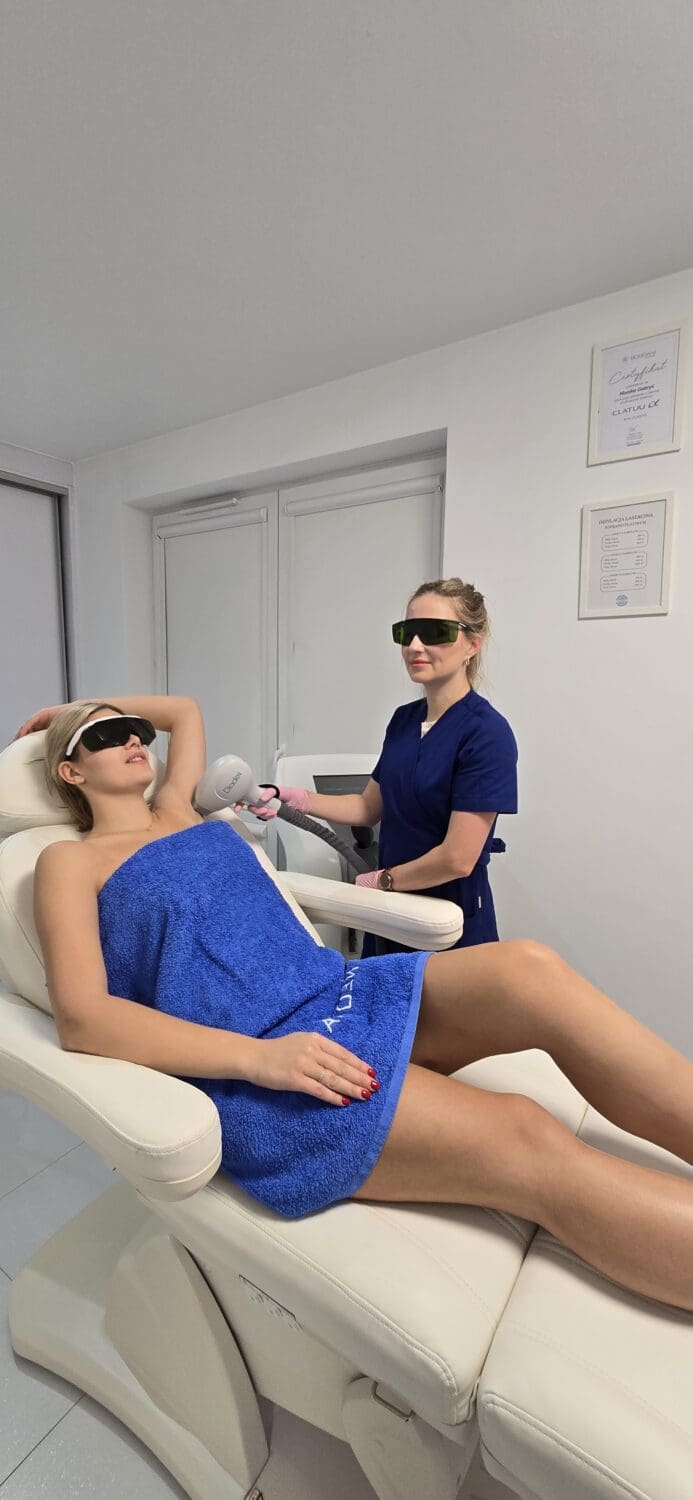
Laser hair removal can be performed on many areas of the body, for both women and men. The choice of treatment area depends on individual preferences, hair characteristics and the results you wish to achieve.
At Neonia Clinic in Kraków, we offer laser hair removal for the most popular areas of the body. You can choose to treat a single area or combine several areas during one appointment, depending on the treatment plan and individual recommendations.
The Most Popular Laser Hair Removal Areas for Women:
- Bikini laser hair removal – including standard bikini, Brazilian bikini and full bikini hair removal. This is one of the most popular treatments, particularly among people who want to reduce irritation and ingrown hairs caused by shaving.
- Underarm laser hair removal – helps reduce unwanted underarm hair and the need for regular shaving.
- Leg laser hair removal – can cover the entire legs or selected areas, such as the lower legs and thighs.
- Upper lip laser hair removal – targets unwanted hair above the upper lip and is popular among people with visible facial hair in this area.
- Facial laser hair removal – can target specific areas, such as the chin, cheeks or upper lip.
- Forearm and upper arm laser hair removal – for people who would like to reduce visible hair on their arms.
- Buttock and intergluteal hair removal – helps reduce unwanted hair in these areas.
The Most Popular Laser Hair Removal Areas for Men:
- Back laser hair removal – particularly popular among men with dense back hair.
- Chest laser hair removal – targets unwanted hair on the chest and can also include the abdominal area if needed.
- Abdominal laser hair removal – for men who want to reduce hair growth in this area.
- Nape laser hair removal – helps reduce unwanted hair around the nape of the neck and natural hairline.
- Shoulder and arm laser hair removal – for men who want to reduce hair on their upper body and arms.
- Underarm laser hair removal – also a popular treatment choice among men.
Can Several Areas Be Treated During One Appointment?
Yes. In many cases, several body areas can be treated during a single appointment. The scope and duration of the treatment depend on the size of the areas, hair characteristics and the individual treatment plan.
If you’re unsure which areas would benefit most from laser hair removal, our team will be happy to help you choose the most suitable treatment plan during your consultation.

Can Men Have Laser Hair Removal?
Absolutely! Laser hair removal is suitable for both women and men. More and more men are choosing long-term hair reduction, not only for aesthetic reasons but also to improve everyday comfort.
Men’s hair is often thicker, more heavily pigmented and denser than women’s. As a result, laser hair removal for men may require a carefully planned course of treatments. Individual genetic and hormonal factors also play an important role, as they influence the intensity of hair growth.
Which Areas Do Men Most Commonly Have Treated?
The most popular treatment areas include:
- Back – particularly popular among men with dense hair growth in this area.
- Chest and abdomen – for those who want to reduce hair on their torso.
- Arms and shoulders – to reduce hair on the upper body.
- Underarms – for aesthetic reasons and greater everyday comfort.
- Nape of the neck – to reduce unwanted hair around the natural hairline.
- Intimate areas – for men who wish to reduce hair in these areas.
Is Laser Hair Removal Effective for Men?
Yes. With the right technology and treatment settings, significant hair reduction can be achieved in men as well. However, due to greater hair density and hormonal influences, some areas may require more sessions or periodic maintenance treatments.
An individual approach is particularly important when treating the back, chest and abdomen, where hair growth can be dense and may change with age and hormonal activity.
Why Do Men Choose Laser Hair Removal?
The most common reasons include:
- Reducing the need for regular shaving
- Minimising ingrown hairs and skin irritation
- Improving comfort during sports and physical activity
- Aesthetic preferences
- Achieving long-term hair reduction
At Neonia Clinic in Kraków, we offer laser hair removal for men using the Primelase Excellence and Soprano Titanium systems. Before treatment begins, we assess the hair type and skin condition, then select the most appropriate technology and treatment settings.
Laser hair removal does not have to mean removing all body hair. It is also possible to aim for a noticeable reduction in hair density while maintaining a natural appearance in the chosen area.
Painless Laser Hair Removal – Is It Possible?
Can laser hair removal be completely painless? The sensations experienced during treatment vary from person to person and depend on several factors, including pain threshold, treatment area, hair density and the device settings used.
Modern laser hair removal systems incorporate technologies designed to improve patient comfort and minimise unpleasant sensations associated with delivering energy to the skin. As a result, many people tolerate the treatment well, although complete freedom from pain cannot be guaranteed.
What Affects Pain During Laser Hair Removal?
Several factors can influence how comfortable the treatment feels:
- Treatment area – the bikini area, underarms and upper lip may be more sensitive than the legs or back.
- Hair thickness and density – thick, heavily pigmented hair may require different treatment settings.
- Individual pain threshold – everyone experiences light pulses and heat differently.
- Treatment settings – choosing the right energy level, pulse duration and treatment technique is important for both results and comfort.
- Cooling system – cooling helps limit heat build-up at the skin’s surface and reduce unpleasant sensations.
How Does Cooling Improve Comfort During Laser Hair Removal?
At Neonia Clinic, we use two systems that incorporate different cooling technologies.
Soprano Titanium features the ICE Plus system, which provides contact cooling during treatment. It is designed to reduce the sensation of heat and improve comfort while laser energy is delivered.
Primelase Excellence uses Crystal Freeze, a contact cooling system integrated into the treatment handpiece. It helps protect the skin’s surface and improve comfort during laser hair removal.
Effective cooling is an important part of modern laser hair removal. However, it cannot completely eliminate all sensations associated with the procedure.
Is Bikini Laser Hair Removal Painful?
The intimate areas are among the more sensitive parts of the body, so some people may experience greater discomfort during treatment than when having their legs or arms treated. However, sensations vary depending on individual sensitivity, hair characteristics and treatment settings.
It is worth letting your practitioner know how you are feeling during the procedure. This allows them to respond appropriately and assess whether any adjustments to the settings are needed.
Is Completely Painless Laser Hair Removal Possible?
We cannot guarantee that laser hair removal will be entirely painless. However, we can focus on proper patient assessment, appropriate treatment settings and the use of cooling systems to help minimise discomfort.
Our aim is to make laser hair removal as comfortable as possible while maintaining appropriate safety standards and treatment effectiveness.
Is laser hair removal safe?
Laser hair removal is an established method of long-term hair reduction. However, like any treatment that uses light energy, it carries certain risks. Proper patient assessment, appropriate device settings and adherence to treatment protocols are essential for ensuring safety.
Modern laser hair removal systems incorporate technologies designed to control energy delivery and limit heat build-up at the skin’s surface. However, this does not mean that the treatment is entirely risk-free or suitable for everyone.
What Skin Reactions Can Occur After Laser Hair Removal?
Immediately after treatment, temporary reactions may occur, including:
- Skin redness
- Mild swelling around the hair follicles
- A sensation of warmth or slight stinging
- Increased sensitivity in the treated area
These reactions are usually short-lived and resolve on their own. Less commonly, more significant side effects may occur, including blisters, burns, hyperpigmentation or hypopigmentation. The risk of these reactions may increase, among other factors, if the skin is recently tanned or has not been properly prepared for treatment.
What Factors Affect the Safety of Laser Hair Removal?
Several important factors contribute to treatment safety:
- Proper patient assessment – before treatment, information should be collected about the patient’s health, medications, skincare products and any potential contraindications.
- Appropriate treatment settings – energy levels, pulse duration and other parameters must be adjusted to the skin phototype, hair colour and treatment area.
- The technical condition of the device – equipment should be properly maintained, serviced and operated in accordance with the manufacturer’s instructions.
- The practitioner’s experience – a thorough understanding of the technology and the ability to assess skin reactions are essential.
- Eye protection – appropriate protective eyewear designed for use with the specific device must be worn during treatment.
- Following aftercare instructions – proper skincare and protection from UV exposure help reduce the risk of complications.
Does the Type of Device Affect Treatment Safety?
Yes. When choosing a laser hair removal clinic, it is worth looking beyond the device’s advertised specifications. The manufacturer, exact model, intended use and supporting documentation are also important considerations.
At Neonia Clinic in Kraków, we use the Primelase Excellence and Soprano Titanium systems. We work with professional equipment, selecting the technology and treatment settings according to each patient’s individual skin and hair characteristics.
Can Laser Hair Removal Be Performed on Tanned Skin?
A tan is an important consideration when assessing a patient’s suitability for treatment. Increased melanin levels in the skin can affect how laser energy is absorbed, potentially increasing the risk of unwanted reactions. For this reason, a recent tan may be a contraindication to treatment, or the procedure may need to be postponed until the skin has returned to a suitable condition.
Before undergoing laser hair removal, it is important to inform your practitioner about any recent sun exposure, use of sunbeds, and any skincare products or medications you are using.
At Neonia, patient safety is one of our top priorities throughout the entire process – from the initial consultation and suitability assessment to the selection of treatment settings and post-treatment skincare advice.
What does the laser epilation treatment look like?
Laser hair removal at Neonia begins with an assessment of the skin and hair, as well as a check for any contraindications to treatment. During the consultation, we discuss your expectations and previous hair removal experiences, then recommend the most appropriate approach.
1. Preparing the Skin
Before treatment, the skin should be clean and shaved in accordance with the instructions provided. The area to be treated is prepared for the procedure. Avoid applying cosmetics, self-tanning products or other substances that could affect the treatment.
2. Selecting Treatment Settings and Eye Protection
The practitioner assesses the treatment area and selects settings suited to the individual characteristics of the skin and hair. Both the patient and the practitioner wear appropriate protective eyewear. This is an essential safety measure when working with laser equipment.
3. Performing the Laser Hair Removal Treatment
The device handpiece is placed against successive sections of the skin, allowing the laser energy to target the pigment in the hair. The treatment covers the entire planned area. Depending on the size of the body area and the technique used, the procedure may take anywhere from several minutes to around half an hour.
4. After the Treatment
Immediately after laser hair removal, the skin may be slightly red, with mild swelling around the hair follicles. These are possible temporary post-treatment reactions. Once the procedure is complete, you will receive aftercare instructions, including advice on how to care for your skin and avoid factors that could cause further irritation.
It is important to remember that laser hair removal does not eliminate all hair in a single session. Treatments are performed as a course because the laser is most effective on hairs in a specific stage of the growth cycle. The number of sessions and the intervals between them depend on several factors, including the treatment area and your individual response to the procedure.
What are the effects of laser epilation?
The result of laser hair removal is a long-term reduction in unwanted hair. With successive treatments, hair gradually becomes less abundant, while regrowth may be finer, weaker and less noticeable. The skin feels smoother, and the need for frequent shaving can be significantly reduced.
The first changes may become noticeable after the initial sessions. However, hair treated with the laser does not fall out immediately. Instead, it is gradually released from the follicles and sheds over the following days or weeks. For this reason, the final results should not be judged immediately after a treatment.
What Factors Affect the Results of Laser Hair Removal?
Results vary from person to person and depend on several factors:
- Hair colour – dark hair generally responds best because it contains sufficient melanin to absorb the laser energy. Very light, grey and white hair may respond poorly to laser treatment.
- Hair thickness and density – thicker, more heavily pigmented hair often absorbs laser energy more effectively than fine, light hair.
- Treatment area – hair in different parts of the body has different growth cycles, so the rate at which results become visible can vary.
- Hormonal and genetic factors – these can influence hair growth and the development of new hair.
- Treatment consistency – following the recommended intervals between sessions helps target hair during successive stages of the growth cycle.
Are the Results of Laser Hair Removal Permanent?
Laser hair removal provides long-term hair reduction, but it cannot guarantee that every hair will be removed permanently. Over time, some new hair may appear, partly due to hormonal changes. In such cases, maintenance sessions may be considered.
At Neonia, we perform laser hair removal using two systems: Primelase Excellence and Soprano Titanium. The choice of technology and treatment settings takes into account your skin characteristics, hair type and treatment area, allowing us to tailor the procedure as closely as possible to your individual needs.
How many treatments are required to get a good effect?
Laser hair removal requires a course of treatments. It is not possible to effectively remove all unwanted hair in a single session because hair follicles are at different stages of the growth cycle. The laser works most effectively on hairs that are in the appropriate growth phase.
In most cases, a course of approximately 4–8 sessions is recommended, although the exact number varies from person to person. Some people achieve satisfactory results sooner, while others may need a longer course of treatment.
What Determines the Number of Sessions Needed?
Several factors influence how many appointments may be required to achieve the desired results:
- Treatment area – hair in different parts of the body has different growth cycles, so each area requires an individually tailored treatment schedule.
- Hair colour and thickness – dark, coarse hair generally responds better to laser treatment than fine hair with less pigment.
- Hair density – the amount of hair in the treatment area can affect the course of treatment.
- Hormonal and genetic factors – these may contribute to persistent hair growth or the development of new hair.
- Individual response to treatment – the rate and extent of hair reduction vary from person to person.
How Far Apart Should Laser Hair Removal Sessions Be?
The intervals between sessions are determined by the treatment area and the hair growth cycle. Having treatments too frequently does not mean that results will be achieved faster. Subsequent sessions should be scheduled to coincide with the stage when the next group of hairs is in a growth phase that allows the laser to work effectively.
The treatment schedule is tailored to each individual and may be adjusted throughout the course, depending on the results observed.
Once the initial course is complete, we recommend maintenance treatments once or twice a year. These can be particularly important for areas where hair growth is strongly influenced by hormonal activity.
Skin care after laser hair removal
After laser hair removal, the skin may be temporarily red, slightly swollen or sensitive to touch. These are common post-treatment reactions that usually resolve on their own. During this time, it is important to care for the skin gently and avoid anything that could cause further irritation.
How Should You Care for Your Skin After Laser Hair Removal?
- Keep your skin moisturised – use gentle moisturising and soothing products, preferably without strong fragrances.
- Avoid excessive heat – for the period specified by your practitioner, avoid saunas, hot baths and other activities or conditions that cause the skin to become excessively warm.
- Protect your skin from the sun – avoid tanning and use sun protection, particularly on exposed areas of the body. A product with a high SPF is recommended.
- Avoid irritating the treated area – for several days, refrain from intensive exfoliation, dry brushing and using skincare products that may cause irritation.
- Wear loose-fitting clothing – particularly after treatments in the bikini and underarm areas, to minimise friction and further irritation.
Can You Sunbathe After Laser Hair Removal?
Immediately after treatment, you should avoid exposure to sunlight and sunbeds. Your skin may be more sensitive, and UV radiation increases the risk of unwanted pigmentation changes. You should only resume sunbathing in accordance with the aftercare advice provided by the clinic.
What Should You Do If Your Skin Becomes Irritated?
Mild redness and swelling around the hair follicles can occur after a properly performed treatment. However, if you develop blisters, severe pain or widespread skin changes, or if symptoms do not subside, contact the clinic for advice on what to do next. Do not use strong medicated products on your own without appropriate professional guidance.
Following the aftercare instructions helps minimise the risk of irritation and supports the skin’s natural recovery process.
Is it worth performing a laser hair removal treatment?
If regular shaving, razor irritation or ingrown hairs are becoming a nuisance, laser hair removal may be a good alternative to traditional hair removal methods. Its main benefit is long-term hair reduction, meaning you may not need to reach for a razor or other hair removal methods as often.
Why Do Patients Choose Laser Hair Removal?
- Saving time – with less hair growing back, you spend less time on regular shaving.
- Less shaving-related irritation – reducing how often you use a razor may help minimise redness, nicks and discomfort.
- A lower risk of ingrown hairs – hair reduction may help people who struggle with this problem.
- Everyday comfort – smoother skin can make daily skincare easier and more comfortable, particularly when treating larger areas of the body.
- Long-lasting results – after completing an appropriate course of treatments, hair growth may be significantly reduced, although complete and permanent removal of every hair cannot be guaranteed.
Is Laser Hair Removal Suitable for Everyone?
The results are not the same for everyone. Effectiveness depends on several factors, including hair colour, thickness and density, the treatment area and individual characteristics. Very light, grey and white hair generally responds poorly to laser treatment.
Before starting a course of treatments, it is worth consulting a specialist who can assess your skin and hair, check for any contraindications and help select the most appropriate technology.
At Neonia Clinic in Kraków, we offer laser hair removal using Primelase Excellence and Soprano Titanium. Having two different technologies available allows us to assess each case individually and determine which option is most suitable.
What determines the price of laser hair removal?
The cost of laser hair removal depends primarily on the size of the treatment area and the number of body areas being treated. The price for a small area, such as the upper lip or underarms, will differ from the cost of treating the full legs or several areas of the body.
The price may also depend on the technology selected and the scope of the treatment. At Neonia Clinic in Kraków, we use two systems: Primelase Excellence and Soprano Titanium. The choice of the most suitable technology takes into account your individual skin and hair characteristics.
Is Laser Hair Removal Cheaper When Purchased as a Course?
Achieving the desired results usually requires several treatment sessions. It is therefore worth checking the available packages and special offers for a course of treatments. Purchasing a package may be more cost-effective than paying for each appointment separately.
How Much Does Laser Hair Removal Cost in Kraków?
You can find the latest prices for individual treatment areas in our laser hair removal price list. Before starting a course, you can discuss the scope of treatment during a consultation and choose an option that suits your needs.
Check our price list to find out how much laser hair removal for your chosen treatment area costs at Neonia Clinic.

How to prepare for the procedure?
Preparation for the laser hair removal procedure requires following several rules:
- limiting tanning a few days before the procedure and resignation from the use of self-tanners ,
- resignation from the use of photosensitizing drugs 2-3 weeks before the procedure ,
- resignation from chemical peels two weeks before the procedure ,
- avoiding irritation and drying of the skin ,
- the day before the procedure, the skin should be shaved.
Contraindications to laser hair removal treatment
- viral, bacterial or fungal skin infections
- the use of drugs that increase the sensitivity of the skin to light
- tumors
- skin inflammation
- connective tissue diseases
- pregnancy and breastfeeding
- fresh tan
- epilepsy
- decompensated diabetes
- atopic dermatitis
- psoriasis
- pacemaker
- albinism (not for the Soprano laser)
- moles (not for the Soprano laser)
- tendency to develop keloids.


